
Frankie Muhammad
901-870-1135
https://www.ShopLiveGood.com/frankiemuhammad
Vitamin D3 and K2 From LiveGood
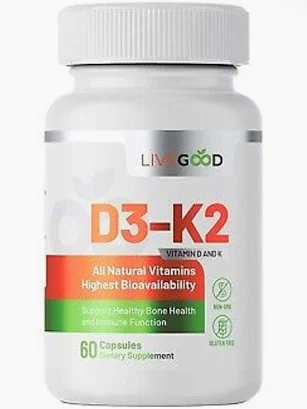
Vitamin D is one of the most important vitamins our bodies need to maintain a healthy immune system?
Did you also know that more people are deficient in Vitamin D than ANY other vitamin on the planet?
Even though our bodies make Vitamin D in response to sunlight, most people aren’t getting enough sunlight on a daily basis to maintain healthy levels of Vitamin D. And since very few foods contain Vitamin D, it’s very common for so many of us to be deficient.
Without enough Vitamin D on a daily basis, our immune systems are weakened, our bone density is compromised, and our bodies are much more vulnerable to sickness and disease.
LiveGood’s Vitamin D3 and K2 with 2,000 units of D3 gives your body the highest quality Vitamin D available anywhere, at optimal levels so you get the most out of every dose.
Scientifically formulated with Vitamin K2 not only supports the function of Vitamin D, but also helps to ensure that calcium reaches the bones to maintain healthy bone density, and to help maintain healthy blood and heart function.
Male, female, old, young, this powerful combination of the highest quality Vitamins D3 and K2 is something EVERYONE should be taking EVERY DAY to get healthy and stay healthy!
How To Use LiveGood Vitamin D3\K2
Take 1-2 capsules by mouth daily with food.
BEST taken WITH FOOD in the MORNING. Vitamins D and K are both fat soluble vitamins which means they absorb better with food. We recommend taking Vitamin D in the morning because evidence suggests that the sleep-awake cycle and melatonin production and secretion is positively impacted by getting your Vitamin D dose in the morning. This makes sense since our ancestors were hunting and gathering in those early dawn hours.
BEST taken every day to maintain consistent blood levels.
Based on analysis of 2001–2018
NHANES data, over 40% of the U.S. population is considered to have vitamin D deficiency or insufficiency.
Key Statistics on Vitamin D Levels (NHANES Data):
- Deficiency (<50 nmol/L or <20 ng/mL): Approximately 24%–42% of Americans are classified as deficient, depending on the specific study criteria used.
- Severe Deficiency (<25 nmol/L): About 2.6% of the population.
- Insufficiency (50–75 nmol/L): Approximately 40.9% of the population.
- Sufficiency (>75 nmol/L): Only about 34.5% of Americans have sufficient levels.
Key Risk Factors and Demographics:
- Race: Non-Hispanic Black (up to 82% deficiency rate) and Hispanic (roughly 63%–69%) populations are at the highest risk.
- Age: Prevalence is often higher in younger adults (20–29) and the elderly (70+).
- Season: Deficiency is more common in winter due to limited sun exposure.
- Lifestyle: Obesity, low milk consumption, and sunscreen use are linked to lower levels